So, what’s the real cost of a wedding? The number you’ll see tossed around most often is the national average, which sits at about $34,200 for 2026. But before panic sets in, it’s important to know that number doesn't tell the whole story.
Understanding the Real Wedding Cost in 2026
When couples start planning, it's easy to get sticker shock from national averages. It's important to remember that these figures are heavily skewed by super high-end weddings in major cities like New York and Los Angeles. A handful of million-dollar events can pull the "average" way, way up.
A much more helpful number for most is the median cost. Imagine lining up every couple by what they spent; the median is the couple right in the middle. Half spent more, and half spent less. While the average is over $34,000, recent data shows the median cost is a much more grounded $10,000. That’s a far more realistic starting point for many couples.
The Three Biggest Factors Driving Your Budget
No matter what, three key decisions will have the biggest impact on your bottom line. Nailing these down early on gives you control over your spending.
- Your Guest List: This is the big one. Every person invited adds to the cost of catering, drinks, rentals, and even the size of the venue needed. It's the ultimate cost multiplier.
- Your Location: Getting married in a bustling city like those in the US, UK, or Europe will always cost more than in a more affordable area. The difference can be tens of thousands of dollars.
- Your Chosen Season: Wedding venues and vendors have peak seasons. A Saturday in October or June is prime real estate and will be priced accordingly. Choosing a Friday in a quieter month like January can lead to significant savings.
The most important thing to remember is that there's no "right" amount to spend. This day is about celebrating your love story. Your budget should be a reflection of your priorities, not some national statistic.
A beautiful, unforgettable wedding is completely within reach, whether you have a large budget or a more modest one. The key is to plan smartly and focus on what truly matters to you both. It's about creating a day rich in personal touches and happy memories, not one that leaves you with financial stress.
As you start dreaming up your big day, you'll find that friends and family want to contribute. When you're ready, a modern gift registry platform like Zelo can help you guide their generosity toward the things you actually need, from honeymoon funds to cash for a down payment. You can create your gift registry to help fund the wedding and the life you're building together.
Your Complete Wedding Budget Breakdown
Figuring out the total cost of a wedding is one thing. Knowing exactly where that money goes? That’s where you really start to take control of your planning. Instead of seeing your budget as one giant, scary number, it helps to think of it as a series of smaller, more manageable pieces. When you break it down, you get a clear picture of your wedding's financial anatomy, which is crucial for deciding where to splurge and where you can save.
For most couples, the journey starts with the biggest line items, since they'll have the most significant impact on the bottom line. It’s no surprise that the venue and catering almost always take the biggest slice of the pie. You aren't just paying for a pretty room; you're covering the food, drinks, and service staff for every single guest. It’s the foundation of the entire celebration.
The Big-Ticket Items
After you've locked in your venue, a few other key services typically make up the bulk of a wedding budget. Capturing the day through photography and videography is a huge priority for many couples, and the price tag reflects the skill and artistry involved. These are the memories you'll treasure for decades, so it’s often seen as a worthwhile investment.
Then you have all the elements that build the look and feel of your day. This includes things like:
- Flowers and Decor: From the bouquet you hold to the centerpieces on each table, florals and decor are what bring your personality and color palette to life.
- Entertainment: The right music sets the entire mood. A great band can keep the dance floor packed all night, while a skilled DJ knows just how to read the room and guide the evening's energy.
- Wedding Planner or Coordinator: Don't underestimate the power of a pro. A seasoned planner can be worth their weight in gold, often saving you money and stress through their vendor relationships and logistical wizardry.
A Closer Look at the Numbers
So, how does this all add up? To give you a clearer idea, here’s a table that breaks down the typical costs for various wedding services based on 2026 estimates.
Average Wedding Cost by Vendor Category (2026 Estimates)
| Vendor/Service Category | Average Cost Range (USD) | Percentage of Total Budget |
|---|---|---|
| Venue & Catering | $12,000 - $25,000+ | 40% - 50% |
| Photography | $3,500 - $6,000 | 10% - 12% |
| Videography | $3,000 - $5,500 | 8% - 10% |
| Flowers & Decor | $2,500 - $7,000 | 8% - 10% |
| Wedding Planner | $3,000 - $6,000+ | 10% - 15% |
| Entertainment (Band/DJ) | $1,500 - $8,000 | 5% - 10% |
| Wedding Attire | $2,000 - $5,000 | 5% - 7% |
| Rings | $1,000 - $8,000+ | 3% - 5% |
This table helps illustrate why that initial quote from a venue can feel so high—it often represents nearly half your total spend! Once you factor in a photographer, florals, and music, you can see how quickly the costs stack up.
The infographic below highlights the three main drivers behind these numbers.
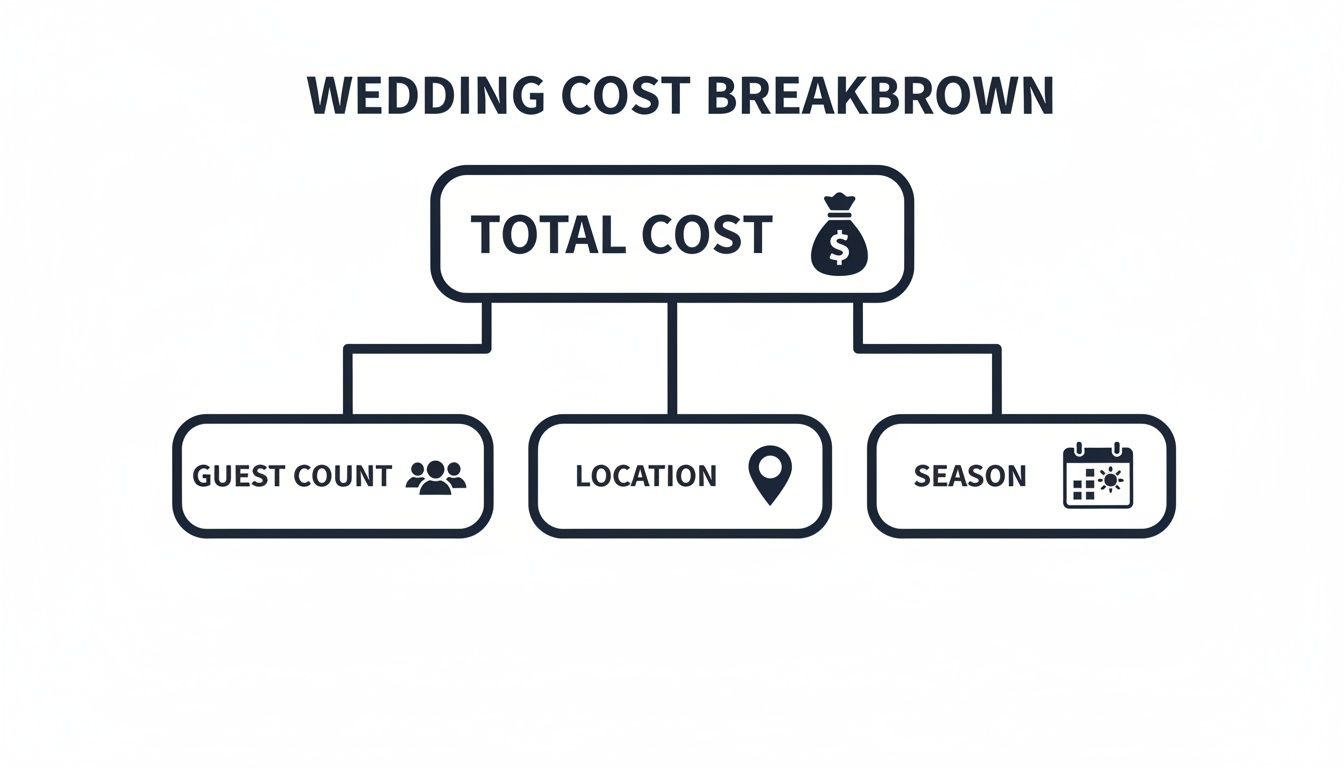
As you can see, your guest count, the city or state you get married in, and even the time of year are the core factors that will shape your entire budget.
The Power of Prioritizing
Seeing these average costs isn't meant to make you feel pressured to spend a certain amount. It's about giving you the information to make smart choices. Maybe you're both foodies who care deeply about an incredible meal and an open bar, so you decide to scale back on elaborate floral installations. Or perhaps breathtaking photography is your absolute non-negotiable.
By understanding where the money typically goes, you can put your funds toward the things that will make your celebration a true and beautiful reflection of your story.
It’s also smart to account for the smaller details that often get forgotten until the last minute. Things like officiant fees, marriage license costs, and vendor tips can really add up. Planning for them from the get-go helps you avoid any nasty surprises down the road. For a deeper dive on that last point, be sure to check out our guide on tipping at weddings.
With a clear view of all the moving parts, you can build a budget that feels right for you. And when you’re ready to get a little help from your loved ones, you can explore Zelo to create a beautiful cash gift registry that makes it easy for guests to contribute to these important wedding day expenses.
Your Guest Count and Location: The Two Biggest Budget-Makers
When you start sketching out your wedding budget, two questions will quickly bubble to the surface and have the biggest impact on the final number: Who are we inviting, and where are we celebrating? These aren't just details on a checklist; they're the foundational decisions that will dictate almost every other cost you'll encounter.
Think of it this way: your guest count sets the scale, and your location sets the price tag. Everything from the size of your venue to the number of forks you need to rent flows directly from these two choices. Getting a handle on them early is the secret to planning a day that’s both incredible and financially sane.
Why Your Guest List is a Budget Multiplier
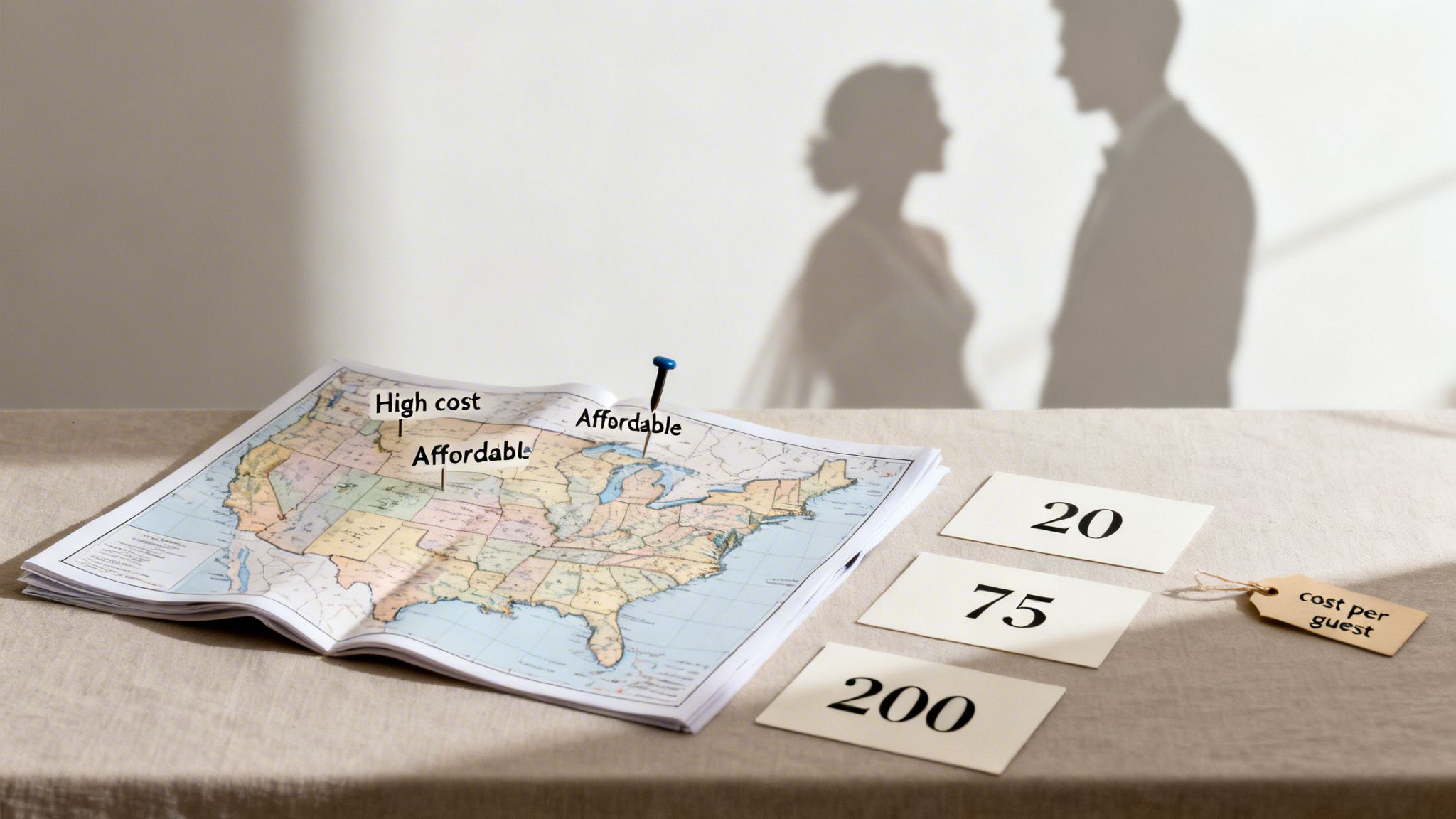
The single most powerful factor driving your wedding spending is your guest count. It’s not just one line item; it’s a multiplier that ripples through your entire budget. Every person you add to the list increases costs across the board. This is what wedding pros are talking about when they mention the cost per guest.
And that figure covers far more than just a plate of food. It also includes:
- Drinks: Whether you're planning a full open bar or a simple selection of wine and beer, the cost is almost always calculated per person.
- Rentals: Every guest needs a chair, a place setting (plates, glasses, silverware), and a spot at a table. More people means more tables, linens, and settings.
- Cake: The size of your wedding cake is determined by how many slices you need to serve.
- Favors: If you're giving out a small thank-you gift, that cost is multiplied by every guest.
- Stationery: More guests mean more invitations, stamps, and place cards.
Let's put this into perspective. Imagine your caterer quotes $150 per person. For a 120-guest wedding, that's $18,000 on food and drink alone. If you can find a way to trim that list by just 20 people, you've just saved $3,000. That's a huge chunk of change you could put toward a band you love, your dream photographer, or just back in your pocket.
How Your Zip Code Sets the Price
Right after your guest count, your wedding's location is the next biggest piece of the financial puzzle. You could plan the exact same wedding—same number of guests, same menu, same flowers—and see the final bill vary wildly depending on the city and country. It’s no secret that some parts of the world are just plain more expensive, a fact confirmed by industry data from sites like The Knot.
In major metro areas and popular destination spots, everything costs more. Higher wages, pricier real estate, and greater demand all drive up the cost of venues, catering, and vendor services. A city wedding in London will almost certainly cost more than a celebration in a rural part of the US.
Here’s a rough idea of how different regions stack up in the US, a trend that is mirrored in other markets like the UK, Australia, and parts of Europe:
- High-Cost Areas: Places like New Jersey, Massachusetts, New York, and California consistently have the highest average wedding costs in the US. A wedding here can easily run 25-50% higher than the national average.
- Mid-Range Areas: You'll find a good balance of beautiful options and more moderate prices in many states across the American Midwest and Southeast.
- Affordable Areas: For the most budget-friendly options, couples often look to states like Utah, Iowa, and others in the Mountain West and parts of the South.
Choosing where to get married isn't just about the scenery; it's about setting a realistic financial foundation. Whether you stay in your hometown to make it easy for guests or choose an intimate destination wedding, this decision will frame every other cost.
Once you have a handle on these two big factors, you’re in the driver’s seat. You can plan with purpose, build a day that truly reflects what's important to you, and maybe even get a little help from your friends and family along the way. When you're ready to share your plans, you can start your Zelo page and give loved ones a beautiful way to contribute to your new beginning.
How Real Couples Spend: A Look at Sample Wedding Budgets
It’s one thing to hear about national averages, but it’s a whole lot more helpful to see how real couples actually put their money to work. A wedding budget is an incredibly personal document; it tells the story of your priorities, your personalities, and the kind of day you truly want to create.
Honestly, there’s no single right answer to "how much should a wedding cost?" because every couple is different. The best way to get a feel for this is to see it in action. Let's look at three different couples, each with a unique vision and a budget to match. You'll see pretty quickly that a dream wedding is all about smart choices, not just a big price tag.
The Intimate Elopement: Chloe & Sam’s $5,000 Adventure
Chloe and Sam just weren't the big, traditional wedding type. The idea of a massive guest list and all the formal trappings felt overwhelming. Their dream was much more them: saying "I do" on a stunning clifftop in Australia, then disappearing for a romantic weekend getaway.
Their priorities were crystal clear. They wanted breathtaking photography to immortalize their private ceremony and a luxurious, completely stress-free experience for just the two of them. With that in mind, they decided to put the biggest chunk of their $5,000 budget toward a photographer whose work they absolutely loved.
Here’s a rough idea of how they spent their money:
- Photography: $3,000 (This was their big splurge, ensuring they'd have epic photos of the scenery and the emotion of the day.)
- Officiant: $500
- Attire & Rings: $750 (They opted for a simple, elegant dress and had bands custom-made by a local artisan.)
- Celebratory Dinner & Champagne: $350
- Travel & Accommodation (2 Nights): $400
By zeroing in on what mattered most to them—incredible memories captured beautifully—Chloe and Sam designed a wedding day that felt completely authentic. Their story is a perfect example of how a smaller budget doesn’t mean a lesser celebration; it just means a more focused one.
The Classic Celebration: Maya & Ben’s $35,000 Gathering
Maya and Ben always pictured a day full of joy, surrounded by about 100 of their closest friends and family. They fell in love with a gorgeous European-style garden venue and knew right away that the guest experience was their top priority.
They built their $35,000 budget around one goal: throwing a fantastic party. For them, that meant amazing food, a full open bar, and a killer live band that would keep the dance floor packed all night. They were definitely mindful of their spending, but they knew these were the things their guests would be talking about for years to come.
Your wedding budget isn't a rulebook designed to limit you. Think of it as a roadmap that helps you invest in the parts of your day that will bring you the most joy. It’s all about putting your resources toward what really matters.
Here’s how their budget broke down:
- Venue, Catering & Bar: $18,000 (This took up nearly half their budget, which makes sense given their focus on the guest experience.)
- Live Band: $6,000 (A non-negotiable for creating the party atmosphere they wanted.)
- Photography & Videography: $5,500
- Florals & Decor: $2,500 (Elegant and beautiful, but not over-the-top.)
- Attire & Rings: $3,000
Maya and Ben’s wedding shows just how a mid-range budget can create a truly timeless and incredibly fun event when you let your priorities lead the way.
The Grand Affair: Olivia & James’s $75,000+ Spectacle
For Olivia and James, this wedding was more than just a party; it was a landmark event they wanted to share with 200 guests. They envisioned an unforgettable black-tie affair and, with a budget starting at $75,000, they were ready to create a sophisticated and seamless experience from beginning to end.
Their first and most important decision was to hire a full-service wedding planner. This allowed them to hand off the complex logistics and actually enjoy their engagement. From there, they invested heavily in transforming their venue—a historic ballroom in the US—with dramatic floral installations, custom lighting, and high-end decor.
A peek at their top-level spending:
- Full-Service Planner: $12,000+
- Venue, Catering & Top-Shelf Bar: $35,000
- Florals, Lighting & Production: $15,000 (This is what creates that "wow" factor.)
- Photography & Videography (Team of 4): $10,000
- 10-Piece Band & Entertainment: $8,000
This kind of grand celebration shows how a larger budget opens the door to a bigger team of pros and truly elevated design, all coming together to create a polished and immersive experience for everyone involved.
As you can see, a successful wedding budget is simply one that reflects you, no matter the final number. As you start to dream about your own day, remember that your loved ones are excited to celebrate with you. A modern gift registry can make it easy for them to contribute to your goals, and when you’re ready, you can start your Zelo page to bring your own wedding vision to life.
Creative Ways to Lower Your Wedding Expenses
Alright, let's talk about getting that budget under control. Seeing the potential total for a wedding can be a real wake-up call, but it's also where you get to take the driver's seat. The goal isn't to slash and burn your dream wedding; it’s about getting clever and making intentional choices that truly reflect what you two are all about.
You’d be amazed at how a few smart adjustments can free up thousands of dollars, giving you more to spend on the things that actually matter to you. Think of it less as "cutting costs" and more as "savvy spending." It's all about finding that sweet spot between your vision and your financial reality.
Revisit Your Timeline and Guest List
If you want to make the biggest dent in your budget, start with the two most significant cost drivers: your date and your guest list. It’s that simple.
Choosing a date in the off-season—a cozy winter affair or a bright early spring celebration—can have an immediate impact. Venues and vendors often have much more flexibility with their pricing outside of the peak summer and fall months. The same goes for getting married on a Friday or a Sunday.
Now for the tough one: the guest list. This can be a really difficult and emotional process, but trimming that list by even 10 or 15 people can save you thousands. Every single guest adds to the cost of catering, bar service, rentals, and more. Honestly, this is the single most effective lever you can pull to manage your wedding costs right from the start.
Make Smart Swaps and DIY Strategically
You don’t need a sky-high budget to create a high-end feel. The secret lies in making strategic substitutions that deliver a similar vibe for a fraction of the price. A fantastic DJ, for instance, can pack the dance floor and create an incredible party atmosphere for significantly less than a 10-piece live band.
Here are a few other practical swaps to consider:
- Flowers: Instead of pricey, out-of-season blooms, ask your florist about using gorgeous in-season flowers. Abundant greenery like eucalyptus or ferns is another great way to create a lush, full look without breaking the bank.
- Food & Drink: Who says you need a formal seated dinner? A chic brunch reception or an extended cocktail party with heavy hors d'oeuvres can feel just as elegant and celebratory—and often costs much less per person.
- Venue: Think outside the traditional ballroom. A stylish restaurant with a private room, a beautiful local park, or even an art gallery can offer a unique backdrop with more flexible pricing. We've got a whole list of outdoor wedding ideas on a budget if you want to explore that route.
Your wedding is a celebration of your love, not a performance. The most memorable details will be the ones that feel authentic to you, not the ones that cost the most money.
Finally, a word on DIY. While it can add a wonderful personal touch and save money, be realistic. Pick projects you'll actually enjoy and that won't add a mountain of stress. Hand-lettering your place cards or creating a custom welcome sign? Fun! Trying to assemble 20 centerpieces the morning of your wedding? Not so much.
By mixing and matching these strategies, you can absolutely design a day that's both beautiful and mindful of your budget.
Fund Your Dream Day with a Modern Gift Registry
After all the spreadsheets and number-crunching, it’s easy to forget that your wedding is a celebration surrounded by people who are truly rooting for you. Traditionally, guests showed their support with physical gifts—the classic toasters, blenders, and bath towels. But let’s be honest, many couples today already have those things from building a home together before the wedding.
This is where the conversation shifts from spending to receiving support. Instead of another kitchen gadget, what if your registry could help pay for the wedding itself, or kickstart your next big life adventure? Modern couples are doing just that by embracing a smarter, more practical approach to their gift list.

A Registry for Your Actual Life Goals
Think about what would really make a difference for you as a newly married couple. Maybe it's that dream honeymoon to Brazil, a down payment for your first house, or even just softening the financial blow of the wedding costs. This is exactly what a modern cash gift registry platform like Zelo is designed for.
It helps you elegantly sidestep the awkwardness of asking for money. Instead, you create a beautiful, personalized registry page that tells your story and highlights specific goals. Guests feel more connected because they see exactly what they're contributing to—they aren't just giving cash, they're buying you a romantic dinner in Rome or putting a few more dollars toward your future home. A recent study from Brides confirmed this trend, finding that 75% of couples see cash funds as a perfectly practical registry option.
A modern registry turns a simple gift into a meaningful contribution. It lets your community champion your future in a way that’s personal, impactful, and genuinely helpful.
Zelo makes the entire process seamless. Your guests can contribute securely online, and you can track everything without dealing with checks or misplaced cash. This isn't just for weddings, either—it’s a great tool for baby showers, graduations, and other big milestones. And with support for Stripe Connect, it's a seamless experience for guests in the US, UK, Europe, Brazil, Australia, and beyond. To get a better sense of the possibilities, check out this complete guide to a collaborative gift registry.
When you're ready to make your wedding vision a reality, you can create your gift registry and give your friends and family a chance to be part of your story in the most supportive way possible.
Your Top Wedding Cost Questions, Answered
As you start digging into the numbers, you're bound to have questions. It's totally normal. From traditions to tracking spreadsheets, figuring out the financial side of a wedding can feel like a job in itself.
Let's clear up some of the most common questions we hear from couples. Think of this as a quick chat to settle any lingering uncertainties so you can get back to the fun part of planning.
Who Traditionally Pays for the Wedding?
Honestly, the old-school tradition of the bride’s family footing the entire bill is pretty much a thing of the past. These days, there are no hard-and-fast rules, which is a good thing!
We see a beautiful mix of approaches. Many couples pay for the wedding themselves, while others get a helping hand from both sets of parents. The most common scenario is a blend, where costs are split in a way that feels fair and manageable for everyone involved. The only "right" way is the one that comes from open, honest conversations between you and your families.
How Can We Track Our Wedding Spending?
The absolute key to sticking to your budget is tracking every single dollar from the very beginning. A detailed spreadsheet is a fantastic, no-frills way to do this. If you prefer something more streamlined, plenty of wedding planning apps have great built-in budget trackers.
First, list your total budget at the very top. Then, break it down with line items for every possible expense you can think of—from the big-ticket vendors to the small details.
Get into the habit of updating your tracker the moment you sign a contract or make a payment. This real-time picture is the only way to prevent surprises and stay in complete control of your finances.
Are Weekday Weddings Really Cheaper?
Yes, they absolutely are! This is one of the best money-saving tips out there.
Choosing a weekday—especially a Monday through Thursday—can lead to some serious savings. Venues and vendors often have lower demand on these days and will offer discounted rates or throw in some nice perks to book the date. Even a Friday or Sunday wedding can be significantly more affordable than a Saturday during peak season, which is always the most expensive day to get married.
What Are Some Common Hidden Wedding Costs?
It's almost always the little things that trip couples up. These small, often-forgotten expenses can sneak up and blow your budget if you aren't prepared. Be sure to account for these common culprits:
- Taxes & Service Fees: This is a big one. Expect them to add 20-30% on top of your final food, beverage, and venue bills.
- Vendor Gratuities: Tipping your amazing team is a wonderful gesture, but it’s rarely included in the initial contract.
- Attire Alterations: That perfect fit comes at a price. The cost to tailor a wedding dress or suit can easily be several hundred dollars.
- Marriage License Fees: The official government fee to get married varies by state and even county.
- Postage: Don't forget the stamps! Especially for invitations with multiple inserts, the cost of postage adds up faster than you'd think.
Planning a celebration of any size is an exciting journey, and Zelo is here to support you at every milestone. We make it simple for friends and family to contribute to what matters most, from weddings to baby showers to graduation celebrations. When you're ready to share your dreams, start your Zelo page.
Enjoyed the article? Share it!