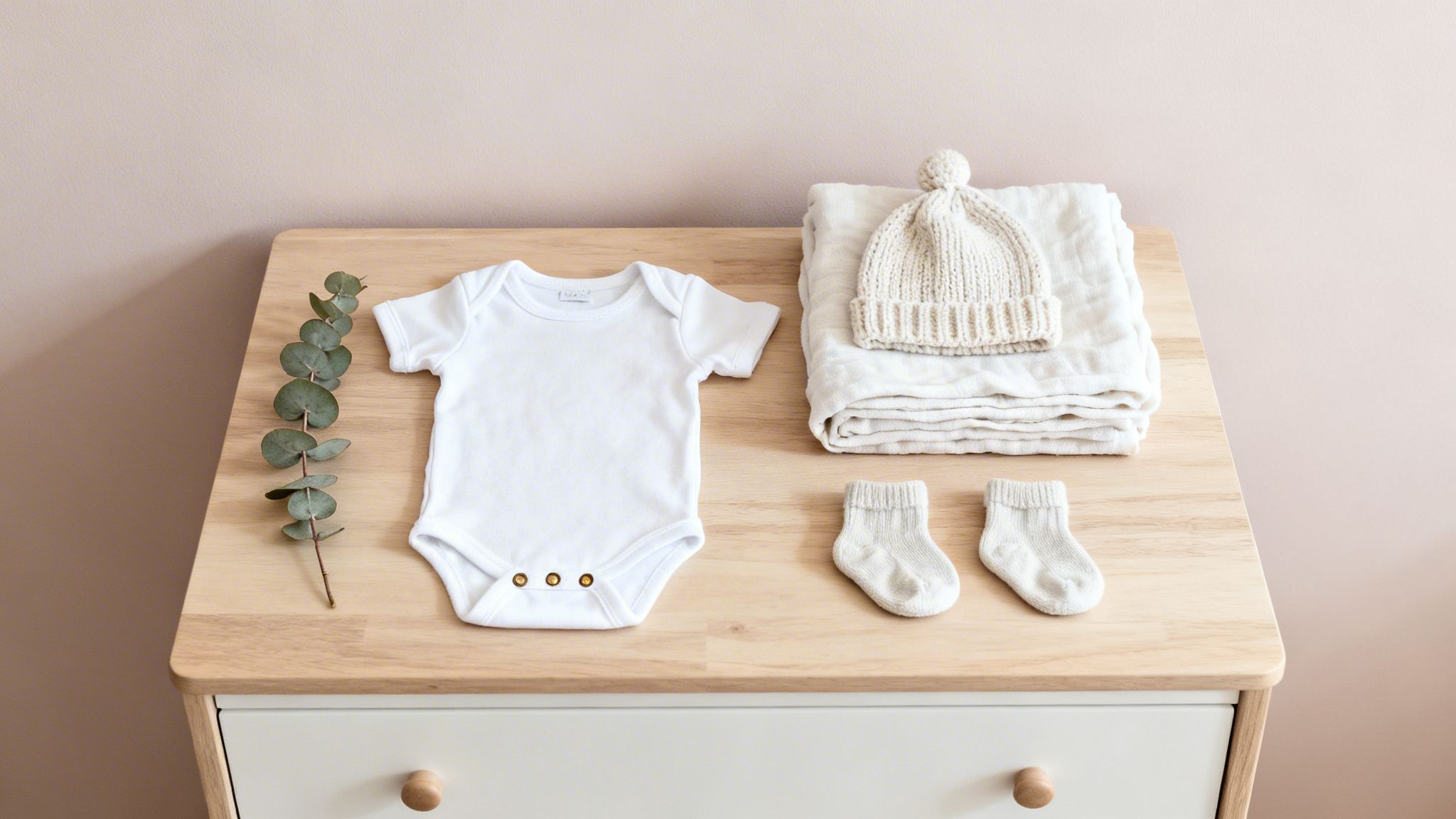
Welcoming a new baby is one of the most celebratory times in life, and preparing their first little wardrobe is a special part of the journey. For those wondering what is really needed to start, a good baseline for the first few months includes 4-8 bodysuits, 4-8 sleepers, 4-6 pairs of pants, 6-8 pairs of socks, 2-3 swaddles, and 2-3 hats. This gives new parents a solid foundation to keep their little one comfortable without overwhelming the nursery.
Preparing for a Baby's Arrival
There's nothing quite like the feeling of preparing for a baby's arrival. Building their first wardrobe is one of the most heartwarming parts of nesting—folding those tiny clothes and imagining the little person who will soon be wearing them. The soft fabrics and sweet designs are enough to make any heart melt.
But it's also understandable to feel a little daunted. Staring at endless racks of baby clothes, it’s easy to wonder, "How many onesies is too many?" or "What's the difference between a sleeper and a sleep sack?" These are common questions among expectant parents. As the experts at BabyCenter point out, a little planning goes a long way toward a stress-free start.
This guide will cut through the noise and help families put together a baby wardrobe that's practical, safe, and just plain adorable.
Focusing on What Truly Matters
While those miniature sneakers are undeniably cute, practicality quickly becomes a parent's best friend in the early days. The goal isn't to have the most clothes; it's to have the right clothes that make those first few hazy weeks a little bit easier.
Here's what to prioritize:
- Ease of Use: At 3 AM during the third diaper change, parents will be grateful for clothes with bottom snaps, side-snap shirts, and two-way zippers. Anything that makes changes quick and painless is a win.
- Comfort and Safety: A newborn's skin is incredibly delicate. It's best to stick with soft, breathable fabrics. It’s also important to avoid items with loose buttons, ties, or decorative bits that could become a hazard.
- A Little Wiggle Room: Babies grow at lightning speed! Many bypass the "Newborn" size within a few weeks. It’s smart to have a mix of sizes, focusing mainly on 0-3 months to get more use out of each piece.
Adopting this mindset makes shopping and registry-building so much simpler. For those in planning mode, our guide on how to organize the perfect baby shower on a budget can be a huge help.
And for ultimate flexibility, parents can start their Zelo page. The platform allows them to create a cash gift registry where friends and family can contribute to a "Baby Wardrobe Fund," so they can buy what they need, when they need it.
The Essential First Wardrobe for a Newborn
As families start planning for their baby's arrival, one of the most exciting tasks is putting together their first wardrobe. It’s easy to get carried away by adorable, tiny outfits, but the key is to focus on a practical "capsule wardrobe." This go-to collection of comfortable, functional pieces will make those first few months a little bit easier.
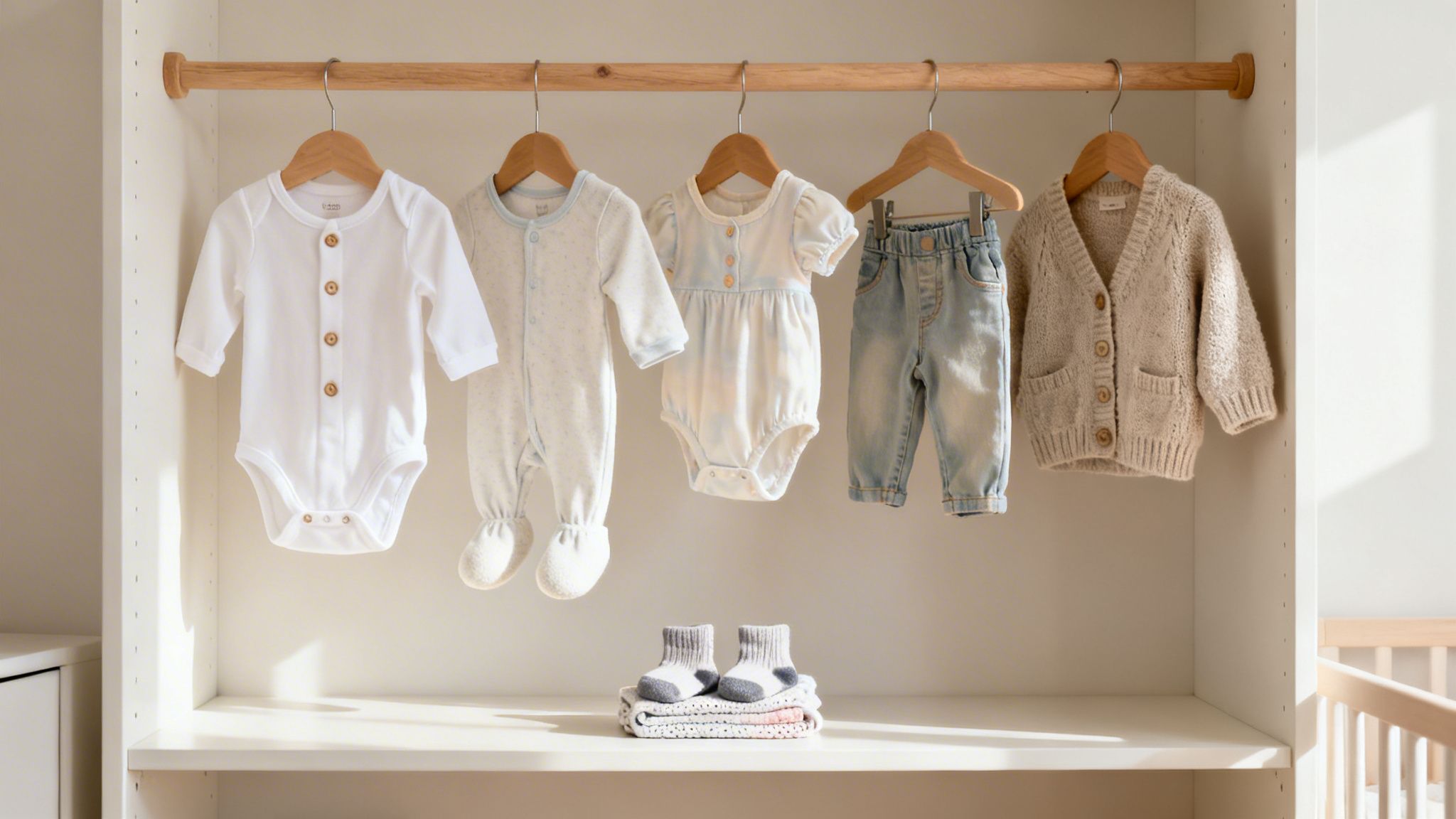
These foundational items are perfect for a baby registry, giving loved ones a clear idea of what will actually be used day in and day out. Let’s break down the real must-haves for a newborn clothing checklist.
Core Comfort: Bodysuits and Sleepers
First things first, bodysuits and sleepers are the workhorses of baby clothing, designed for endless cuddles, spit-up incidents, and surprisingly frequent diaper changes.
- Bodysuits (Onesies): These are simple T-shirts with snaps at the crotch, a genius design. The snaps keep the shirt from riding up the baby's back and make diaper changes much faster. A practical tip is to look for bodysuits with envelope-style necklines. During a major diaper blowout, the entire bodysuit can be pulled down over the baby's shoulders instead of up over their head.
- Sleepers (or Sleep-and-Plays): These one-piece, footed outfits are an all-in-one solution for naps and playtime. For late-night changes, a zippered sleeper is a parent's best friend. Even better are the ones with a two-way zipper, which allow for unzipping just the bottom half to change a diaper while keeping the baby’s chest and arms warm and cozy.
It's no surprise that these basics are the foundation of the global baby clothing industry, which was valued at a staggering USD 41.21 billion in 2024. As more parents in the US, UK, and Australia shop online, using a digital registry platform can boost guest participation by up to 30%. More of these trends can be found in baby clothing market insights from Intel Market Research.
Essential Layers: Pants, Socks, and Swaddles
With bodysuits and sleepers as the base, the next step is adding layers for warmth and versatility. These pieces help families easily adapt to the temperature, whether cozy at home or out for a stroll.
- Soft Pants: Having a few pairs of soft, stretchy pants is incredibly useful. They can be pulled over a bodysuit to create a simple outfit and are much easier to manage than a full one-piece for a quick diaper check.
- Socks or Booties: Babies lose heat quickly through their hands and feet, so keeping those tiny toes warm is key. While footed sleepers handle this, socks are needed for any bodysuit-and-pants combo. Soft pairs with gentle elastic that actually stay on are best.
- Swaddles: For the first few months, most newborns sleep much better when swaddled, as it recreates the secure feeling of being in the womb. Many parents find wearable swaddle sacks with Velcro or zippers easier than a traditional blanket. They're also considered a safer sleep option, a recommendation backed by the American Academy of Pediatrics.
Building a newborn wardrobe isn't just about cute clothes—it's about setting parents up for success. When they prioritize items that simplify diaper changes, keep their baby comfortable, and ensure safety, those early days of parenthood feel that much smoother.
Adding these essentials to a registry is a fantastic way to prepare. With platforms like Zelo, families can even create a cash gift registry and set up funds for a "First Wardrobe" or "Diapering Fund." This gives friends and family a meaningful way to contribute as they get ready to welcome the little one.
Choosing the Safest and Softest Fabrics for a Baby
There's nothing quite like the feeling of a newborn's skin—it's brand new, incredibly soft, and so delicate. Because a baby's skin is much thinner and more sensitive than an adult's, the fabrics chosen for their first wardrobe aren't just about style. It’s all about their comfort and safety.
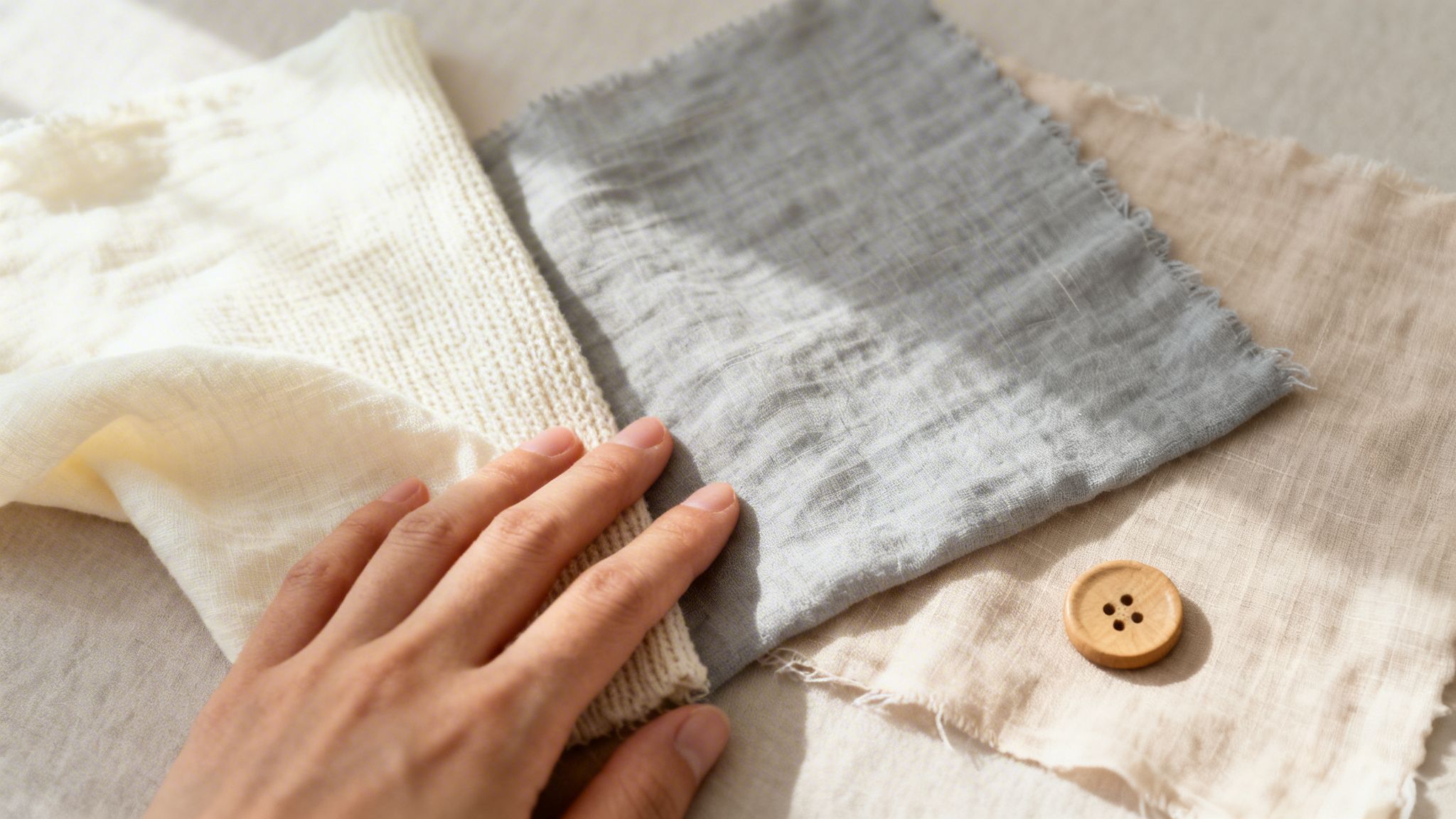
Each little outfit acts as a second skin for the baby. The best ones are soft, breathable, and won't cause irritation, keeping the little one happy whether they’re napping or taking in the world around them.
Top Fabric Picks for Tiny Torsos
As parents start to build out their baby's wardrobe, they'll notice a few fabrics that are clear winners. Focusing on these materials is a great way to guide friends and family toward gifts that are both practical and gentle on the baby.
- Organic Cotton: This is the go-to for good reason. Grown without harsh pesticides or chemicals, organic cotton is super soft, lets skin breathe, and is perfect for sensitive babies. It’s also tough enough to handle all those inevitable laundry cycles.
- Bamboo Rayon: For those who have felt bamboo clothing, they know how silky and smooth it is—almost like cashmere. It’s naturally hypoallergenic and fantastic at wicking moisture away from the skin, which helps keep a baby dry and comfortable.
- Muslin: This is that lightweight, gauzy-looking cotton fabric seen everywhere. Muslin is incredibly breathable, which makes it ideal for swaddles and any warm-weather outfits. It helps regulate their body temperature, so parents don't have to worry as much about them overheating.
Choosing natural, eco-friendly fabrics isn't just a niche trend anymore; it's a huge part of how parents shop today. In fact, 85% of the demand for organic baby clothing comes from North America and Europe. Searches for 'biodegradable baby clothes' have jumped by 80% in just one year, and organic cotton now makes up over 60% of the global market. More baby clothing industry stats can be found on Rawshot.ai.
Safety Standards Every Parent Should Know
Of course, it’s not just about how a fabric feels. The little details in how a piece of clothing is made are incredibly important for keeping a baby safe.
It's easy to get overwhelmed by safety certifications, but they all share one simple goal: making sure nothing harmful gets near the baby. Looking for a label like GOTS is a quick shortcut to knowing a garment meets the highest health and environmental standards.
Here are a few quick safety checks to keep in mind:
- Look for Certifications: The Global Organic Textile Standard (GOTS) certification is the one to watch for. It’s a reliable guarantee that a fabric is genuinely organic and was made without harsh chemicals.
- Avoid Embellishments: As cute as they are, it's wise to steer clear of clothes with little buttons, beads, or sequins. They can become choking hazards if they come loose. The same goes for any long drawstrings or ties around the neck.
- Check the Fastenings: Gently tug snaps to make sure they’re secure. If an outfit has a zipper, check for a fabric flap at the top—this little "zipper garage" protects a baby’s delicate chin from getting pinched.
When you create your gift registry, you can add a little note about your fabric preferences. It’s a simple way to help everyone celebrate the new arrival with gifts that are adorable, safe, and genuinely useful.
How Many Clothes Does a Newborn Actually Need
Figuring out how many baby clothes are really needed is one of those classic nesting puzzles. On one hand, parents picture endless spit-ups and diaper blowouts. On the other, they’ve heard the stories of babies outgrowing outfits before the tags are even off. The truth is, there isn't a single magic number. The right amount for a family comes down to a few key things: the baby's size, the laundry routine, and the season they arrive in.
A great place to start is by thinking in two distinct sizes. First, there's Newborn (NB), which is generally for babies between 5-8 pounds. Then there is 0-3 Months, which fits babies in the 8-12.5 pound range. It’s so tempting to buy up all the adorable, tiny newborn outfits, but a word of advice: don't go overboard. Many babies are born big enough to skip that size entirely, and others will outgrow it in just a couple of weeks. Focusing most of the energy (and budget) on 0-3 month clothes is a much safer bet.
Sizing Up the Laundry Schedule
One of the biggest factors in determining how many of each item will be needed is how often the washing machine will be running. Is the family full of one-load-a-day people, or is it all saved for a weekend marathon?
- Daily Laundry Doers: If a washer and dryer are right at hand and the plan is to run them often, a more minimalist wardrobe is possible. About 4-6 of each core item, like bodysuits and sleepers, will probably be fine.
- Twice-a-Week Washers: If laundry day only comes around a couple of times a week, a bigger buffer will be needed. Aiming for 8-10 of each essential piece will save families from those late-night searches for a clean outfit.
Thinking about it this way helps build a practical checklist that works for real life, not just a theoretical one.
Adjusting the Checklist for the Seasons
The other big piece of the puzzle is the due date. The core items for a baby born in the heat of a July in Europe will look very different from those for one arriving in a January snowstorm in the US. Layering is always a smart move, but the base pieces are what really count.
For a Summer Baby: The main goals here are keeping the baby cool, comfortable, and protected from the sun. Think lightweight and breathable materials.
- Essentials: Short-sleeve bodysuits, airy cotton rompers, and muslin swaddles will be the go-to items.
- Nice-to-Haves: A wide-brimmed sun hat is an absolute must-have for any time spent outdoors.
For a Winter Baby: It’s all about warmth and cozy layers. The little one will need to be dressed for a warm house but also be ready for those chilly trips outside.
- Essentials: Long-sleeve bodysuits, footed sleepers made of fleece or microfleece, and soft, stretchy pants are non-negotiable.
- Nice-to-Haves: Sweater-knit cardigans, a warm beanie-style hat, and some cozy booties or thick socks will get tons of use.
No matter when a baby is born, it's important to remember they can't regulate their body temperature nearly as well as adults can. A fantastic rule of thumb, often shared by experts at places like The Knot, is to dress a baby in one more light layer than what an adult is wearing to be comfortable.
Putting these seasonal needs on a registry is a great way to guide friends and family toward gifts that are genuinely helpful. Instead of letting them guess, they can be pointed in the right direction. With a platform like Zelo, families can even create specific cash funds for things like a "Winter Wardrobe Fund" or "Summer Essentials." It's a thoughtful way for loved ones to contribute to exactly what is needed.
Building a Dream Baby Shower Registry
A baby registry is more than just a list; it’s a wonderful way for friends and family to share in the excitement as a family gets ready for their little one. It turns the very practical job of stocking up from a newborn clothing checklist into a real celebration. While traditional registries are still around, a more modern approach can give families and their guests a lot more freedom.
Think of a registry as a curated wish list. Instead of being locked into one store, what if one could mix specific gift ideas with cash funds for bigger goals? Using a flexible gift registry platform like Zelo lets families do just that. It gives loved ones the chance to contribute in a way that feels right for them. For example, a Brazilian family member can easily contribute cash towards a gift for a new parent in Australia.
Combining Wishes with Practicality
The best registries give people options. Some guests will absolutely love picking out that perfect, high-quality organic sleeper that has been on the list. Others might prefer contributing to a larger fund, knowing they’re helping build a solid foundation for the baby’s first year.
With Zelo, it's possible to have it both ways. The platform lets users add specific items from any online store right alongside personalized cash funds. For example, a family could create:
- A "First Wardrobe Fund": Perfect for gathering contributions to buy basics as the baby quickly grows out of their first set of clothes.
- A "Nursery Style Fund": For bigger-ticket items like a crib, changing table, or that cozy rocking chair a parent can already picture themselves in.
- A "Diaper & Wipes Fund": A super practical and always-appreciated fund for those daily necessities.
This little visual guide can help in starting to think about how many clothes might be needed right at the beginning.
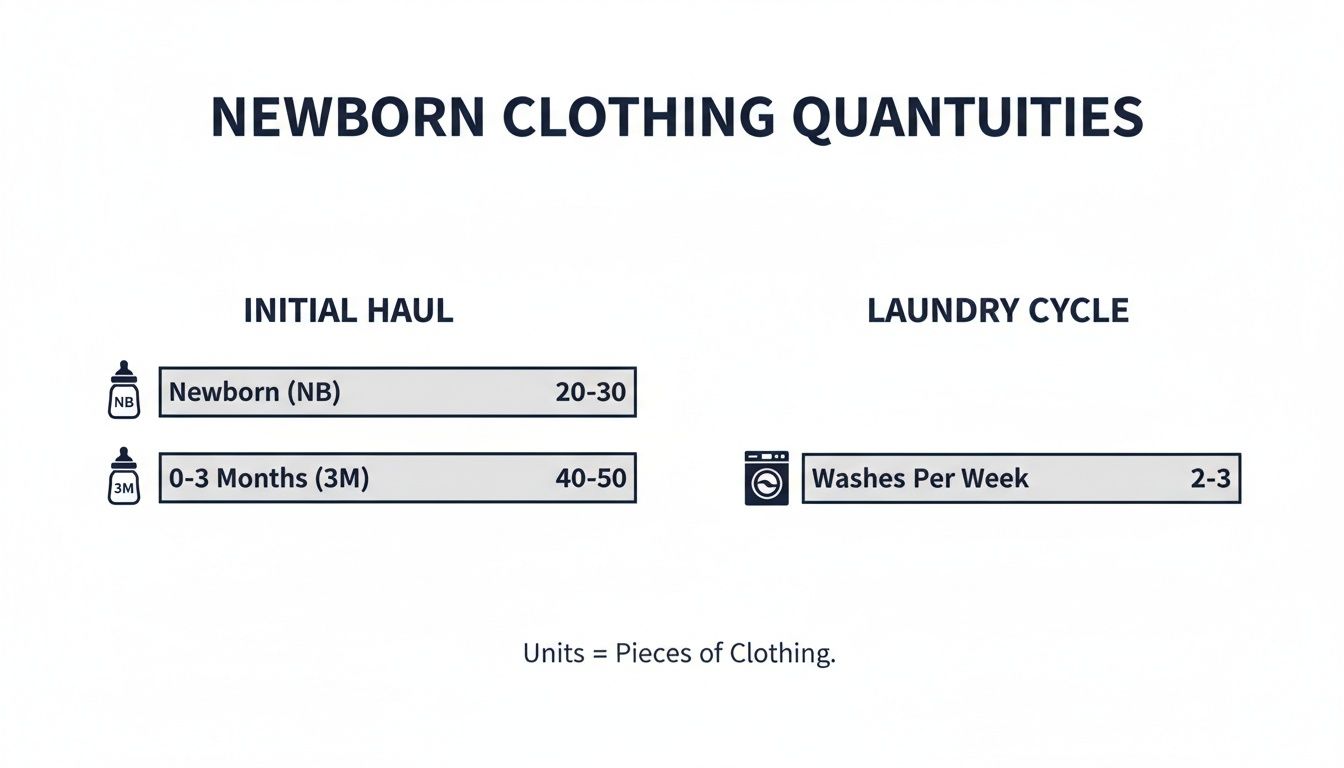
As you can see, it makes sense to have more 0-3 month clothing than newborn sizes. Babies grow incredibly fast in those early weeks, and having a slightly larger stash means parents won't be doing laundry every single day.
Setting Up a Zelo Registry
Putting a registry together on Zelo is a fun, celebratory process. Users can design a beautiful page that tells their story and shares their excitement with everyone. Adding cash funds is simple, and they can be given fun, descriptive names that match the user's personality.
Once the page is ready to go, sharing it is as easy as sending out a single link. For more great ideas to get started, check out our guide on unique baby shower registry ideas.
By offering a mix of specific items and flexible cash funds, users create a stress-free experience for everyone. Guests can feel confident they're giving a gift that’s genuinely wanted, and the family gets the flexibility to prepare for their baby in a way that truly works for them.
Clothing Tips for Outings and Organization
So, all those adorable little outfits from the newborn clothing checklist have been gathered. Now comes the fun part: figuring out how to manage it all! A little organization goes a long way in making those first few months feel less hectic. With a few simple tricks for packing and storing, parents can spend less time searching for a matching sock and more time soaking in every sweet moment.
Getting organized ahead of time is the key to transforming potential chaos into calm. Whether it's prepping for a baby’s first trip outside or just trying to find a clean onesie during a 3 a.m. feeding, these tips will become a new parent's best friends.
Mastering the Diaper Bag
A diaper bag is a mobile command center. Packing it smartly means being ready for anything, from a surprise chilly breeze to the inevitable spit-up or blowout.
Here’s what parents will be glad they packed:
- Two Full Changes of Clothes: It is absolutely essential to have two complete backup outfits. A simple bodysuit paired with a comfy footed sleeper is a great combo—they’re versatile and don't take up much room.
- A "Spill Zone" Bag: Always bring a wet/dry bag or even just a plastic grocery bag to quarantine any soiled clothing. This is a lifesaver for keeping messes contained and away from clean items.
- Seasonal Layers: Tuck in a lightweight muslin blanket during the summer for shade, or add a cozy hat and cardigan for winter outings. This way, the baby stays comfortable no matter what the weather decides to do.
A fantastic piece of advice for every new parent: restock the diaper bag the second they walk in the door. It takes five minutes, but it saves them from that frantic, last-minute scramble when trying to leave. It’s a simple habit that buys so much peace of mind.
Nursery Storage and Organization Solutions
As tiny as they are, a baby’s clothes can take over the nursery fast. Babies grow at an astonishing pace, so sorting their wardrobe by size right from the start is a total game-changer. It makes grabbing the right outfit effortless and lets parents see what they have (and what they might need next) at a glance.
Try these clever storage ideas:
- Use Drawer Dividers: These are fantastic for separating bodysuits, pants, sleepers, and socks into their own little zones inside a dresser. No more digging through a jumbled pile.
- Invest in Closet Organizers: Simple hanging dividers labeled by size (e.g., Newborn, 0-3 Months, 3-6 Months) are worth their weight in gold. They let parents see their baby’s entire clothing journey lined up and ready.
- Create an "Outgrown" Bin: Keep a designated storage bin somewhere handy, like in the closet. The moment an outfit is too snug, it can be tossed in. This keeps the drawers clutter-free and makes it easy to store or pass on clothes later.
Getting the nursery organized is all part of the nesting process, making everything feel ready for the new arrival. To streamline prep even more, explore Zelo and see how a flexible cash registry can help families get everything they need with total ease.
Frequently Asked Questions About Newborn Clothing
As new parents start buying and sorting tiny clothes, they’re bound to have questions. It’s a whole new world! Here are a few of the most common ones heard from new parents, with answers to help them feel prepared.
Should I Wash Newborn Clothes Before the Baby Arrives?
Yes, absolutely. This can be thought of as one of the last, most satisfying nesting tasks. New clothes, no matter how clean they look, can carry dust, dirt, or leftover chemicals from the factory.
Washing everything in a gentle, fragrance-free detergent ensures that only the softest, purest fabric will touch a newborn's incredibly sensitive skin. Experts at trusted sources like BabyCenter always recommend this step to prevent any potential irritation.
What Is the Difference Between Newborn and 0-3 Months Sizes?
This is a question that trips up almost every new parent, so they're in good company! The difference really comes down to the baby's weight and length, not their age.
- Newborn (NB): This tiny size is designed for babies around 5-8 pounds (2.2-3.6 kg).
- 0-3 Months: This size fits slightly larger babies, usually from 8-12.5 pounds (3.6-5.7 kg).
A practical tip: babies grow astonishingly fast. Some are even born weighing over 8 pounds and skip the Newborn size completely! It’s always a smart move to have more 0-3 month clothes on hand than Newborn ones.
How Do I Handle Clothing Gifts That Are Not on My Registry?
Friends and family get so excited, and sometimes that excitement means they go off-registry. The best approach is always to accept the gift graciously and send a warm thank you note. For those who need a little help with wording, our great guide on crafting the perfect thank-you cards can help.
Once at home, everything can be sorted through privately. Keep the outfits that are loved, and for any duplicates or items that aren't quite the family's style, check for a gift receipt. This is where a cash fund registry really helps, as it gives loved ones a clear way to contribute to what is truly needed.
What Are the Best Clothing Items for a Hospital Bag?
For a baby's first few days, focus on comfort and simplicity. Pack two or three easy outfits. A side-snap bodysuit is a fantastic choice because it won't rub against the umbilical cord stump. Pair it with some soft pants or a footed sleeper. Don't forget a soft hat and a pair of socks to keep the little one cozy.
Plan a special "going-home" outfit! It's such a small thing, but picking out that one outfit for their first trip home makes the moment feel even more memorable. Just make sure it’s weather-appropriate and easy to get on a wiggly newborn.
Preparing for a baby is one of life’s greatest adventures. To make the gifting experience easy and meaningful for everyone, Zelo lets users build a modern, flexible gift registry. They can create cash funds for their baby’s wardrobe, nursery essentials, or anything else a growing family needs. To get started, explore Zelo.
Enjoyed the article? Share it!