Avoiding physical gifts means choosing presents that create lasting memories instead of temporary satisfaction and clutter. The concept of experiential gifting, defined as giving access to events, activities, or shared moments rather than objects, has strong backing from psychological research. Hedonic adaptation causes happiness from material goods to fade within days or weeks. Experiences, by contrast, generate joy before, during, and long after the event itself. For anyone planning a wedding, birthday, baby shower, or graduation, understanding why traditional gifts often fall short is the first step toward planning something genuinely meaningful.
Why avoid physical gifts? The psychology behind the choice
Physical gifts trigger a predictable happiness pattern: a brief spike followed by a rapid return to baseline. This is hedonic adaptation, a well-documented psychological process where people quickly adjust to new possessions and stop deriving pleasure from them. A new kitchen gadget feels exciting on day one. By week three, it sits in a drawer.
Experiences work differently because they unfold across three distinct stages. Experiential gifts generate sustained happiness through anticipation, event engagement, and positive recollection, unlike physical gifts, which provide only a fleeting pleasure. That three-act structure means the happiness from a cooking class or weekend trip stretches across weeks, not hours.
Research published in Psychological Science found that anticipation from experiences produces greater happiness gains than anticipation from material goods. People enjoy looking forward to events more than they enjoy waiting to receive objects.
Social connection is another area where experiences outperform objects. People feel stronger social bonds with others who have shared similar experiences than with those who simply own similar items. A shared concert, cooking class, or travel experience becomes part of a person’s identity and relationship history in a way that a blender never will.
The psychology of meaningful gifts also shows that recipients remember the thought behind an experience long after the event ends. Memory formation ties emotional significance to the giver, strengthening the relationship in ways that physical objects rarely achieve.
- Hedonic adaptation erases the pleasure of physical gifts within days or weeks.
- Experiences generate joy across three stages: anticipation, participation, and recollection.
- Shared experiences build stronger interpersonal bonds than shared possessions.
- Memory formation from experiences reinforces the emotional connection to the giver.
How do physical gifts contribute to clutter and environmental harm?
The practical costs of traditional gifting go beyond disappointment. Many physical gifts end up unused, and a 2020 UCLA study found direct correlations between large household possession counts and elevated stress levels, particularly for women managing home organization. Clutter is not a neutral outcome. It actively degrades quality of life.
The environmental picture is equally serious. Physical gifts carry a full lifecycle impact: raw material extraction, manufacturing, packaging, shipping, and eventual disposal. The fashion industry alone contributes to 10% of global carbon emissions and ranks as the second-largest water polluter globally. Electronics gifting carries a similar footprint. Both categories dominate traditional gift registries.
- Raw material extraction depletes natural resources before a product even reaches a factory.
- Manufacturing and packaging add carbon emissions and plastic waste to the supply chain.
- Shipping generates additional emissions, especially for expedited or international delivery.
- Unused gifts often end up in landfills, completing a wasteful cycle with no lasting benefit.
Experience gifts sidestep most of this chain entirely. A dinner reservation, a spa day, or a contribution toward a honeymoon trip produces a fraction of the environmental footprint of a boxed product. For event planners who care about eco-friendly celebrations, this distinction matters.
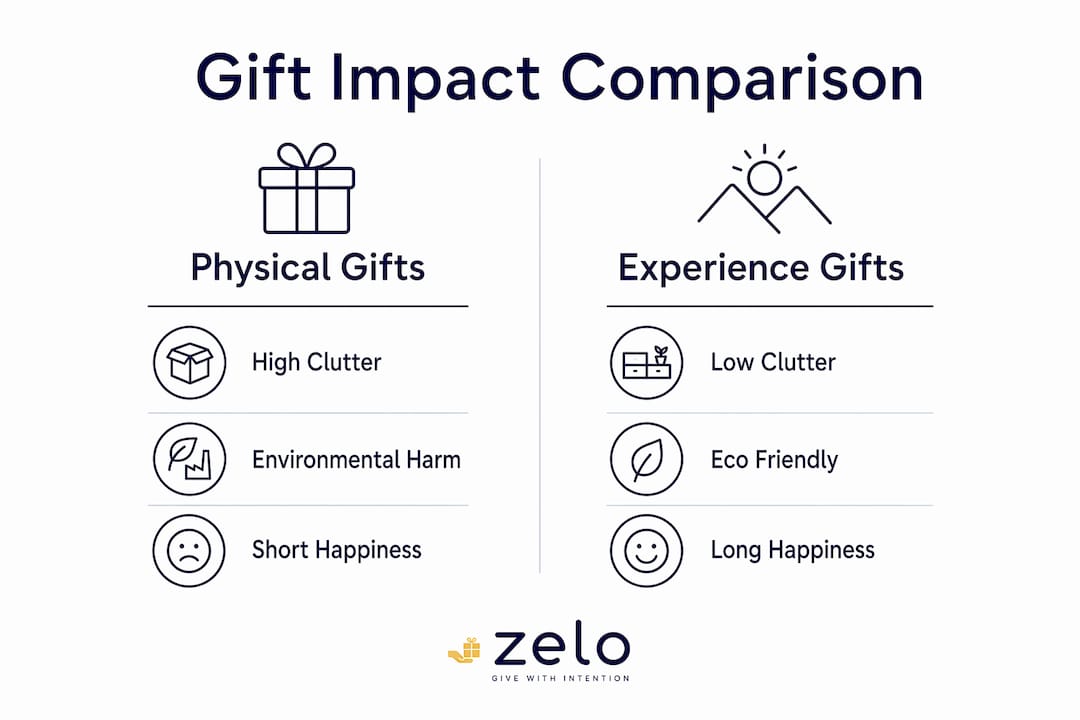
| Gift Type | Clutter Risk | Environmental Impact | Happiness Duration |
|---|---|---|---|
| Physical product | High | High (full lifecycle) | Short (days to weeks) |
| Experience gift | None | Low (minimal materials) | Long (anticipation + memory) |
| Cash contribution | None | Negligible | Flexible to recipient’s needs |

Pro Tip: When guests ask what to bring to an event, suggest a specific experience goal rather than a general category. “Contribute to our first anniversary dinner” generates more enthusiasm and participation than “no gifts necessary.”
What are the best practices when switching to experience gifts?
Switching from physical to experiential gifts requires attention to presentation and logistics. Presentation quality is critical to the success of experience gifting. An emailed voucher alone reduces the perceived thoughtfulness of the gift, even if the experience itself is exceptional. The reveal moment matters.
Tangible presentation elements solve this problem. Printed itineraries, handwritten notes, themed envelopes, or small props tied to the experience give recipients something to hold and open. This approach preserves the satisfying unboxing moment while delivering something far more meaningful than another object. Printed notes and thematic props create a satisfying reveal akin to unwrapping a physical gift.
Scheduling is the other major pitfall. Short-term, inflexible bookings often turn experiences into perceived homework, reducing gift enjoyment for recipients in hectic life phases. A spa voucher that expires in 30 days feels like a deadline, not a gift. Flexible redemption periods prevent this problem and increase overall gift appreciation.
- Match the experience to the recipient’s actual interests, not your assumptions about them.
- Offer a long redemption window, ideally six months or more, to remove scheduling pressure.
- Use wish lists so recipients can specify preferred experiences, timing, and any restrictions.
- Coordinate group contributions through a single platform to avoid duplication and confusion.
Gift wish lists for experiences reduce duplication, increase gift relevance, and improve confidence for both buyers and recipients. They also make coordination among multiple contributors far simpler, which is especially useful for weddings, milestone birthdays, and baby showers where many guests want to give collectively.
Pro Tip: For group events, create a named experience goal rather than a general fund. “Help us reach our cooking class for two” outperforms “gift fund” every time because it gives contributors a clear, emotionally resonant purpose.
How are modern gifting trends moving away from physical gifts?
The shift away from traditional gifts is visible across every major life event category. Soft registries, defined as registries that fund experiences rather than list physical products, are gaining ground at weddings, housewarmings, and baby showers. 2026 wedding industry reports indicate that named experience goals, such as a honeymoon dinner or a first-anniversary trip, boost guest participation compared to generic cash pots.
Younger generations are driving this change. They prioritize intentionality, sustainability, and quality time over accumulating possessions. This reflects a broader cultural shift toward reducing material consumption and investing in relationships. The future of cash gifting is built on this foundation: guests want to contribute to something specific and meaningful, not hand over an envelope with no context.
| Gifting Approach | Guest Experience | Recipient Outcome | Environmental Impact |
|---|---|---|---|
| Traditional registry (physical items) | Browse and buy objects | Receives items, some unused | High |
| Generic cash fund | Contributes money with no context | Receives funds, purpose unclear | Low |
| Named experience fund | Contributes to a specific goal | Funds a meaningful memory | Very low |
The rise of experience-focused registries also aligns with rising environmental awareness. Guests who care about sustainability feel better contributing to a shared experience than purchasing another product wrapped in plastic. Experience gift registries reflect this shift, showing that memories consistently outperform material things in long-term satisfaction.
- Soft registries with named goals generate stronger guest participation than open-ended cash requests.
- Younger event hosts increasingly reject traditional registries in favor of experience funds.
- Environmental awareness is a growing factor in gifting decisions across all age groups.
- Platforms that support personalized event pages make experience-based gifting accessible and organized.
Key takeaways
Experiences generate longer-lasting happiness than physical gifts because they create joy across anticipation, participation, and recollection, while physical gifts fade quickly due to hedonic adaptation.
| Point | Details |
|---|---|
| Hedonic adaptation limits physical gifts | Happiness from material goods fades within days; experiences sustain joy across three stages. |
| Clutter and stress are real costs | Unused physical gifts increase household stress, as confirmed by UCLA research on possession counts. |
| Environmental impact is significant | Physical gift lifecycles contribute to carbon emissions and landfill waste; experiences have minimal footprint. |
| Presentation makes experiences land well | Tangible reveal elements like printed notes and itineraries preserve the satisfying gift-opening moment. |
| Named experience goals drive participation | Specific goals such as “honeymoon dinner” outperform generic cash funds in guest engagement. |
The shift I’ve seen firsthand
By Rodrigo
I’ve watched the same scene play out at dozens of events: a beautifully wrapped gift gets opened, receives a polite smile, and ends up in a donation pile six months later. The giver spent real money. The recipient felt real obligation. Nobody won.
Cultural conditioning runs deep here. Retail marketing has spent decades equating love with tangible objects. Breaking that habit feels uncomfortable, especially for older guests who grew up with the expectation that a “real” gift has weight and wrapping paper. I’ve seen event hosts hesitate to ask for experience contributions because they worry about seeming ungrateful or unconventional.
The hosts who push past that hesitation consistently report better outcomes. One couple I worked with set up a named fund for a cooking class in Italy. Guests didn’t just contribute money. They sent notes about how excited they were for the couple to have that experience. The emotional response was qualitatively different from anything a registry of kitchen appliances would have generated.
My recommendation for event planners is direct: name your experience goals specifically, present them with context and warmth, and give guests a clear, easy way to contribute. The discomfort of asking is temporary. The memory lasts for years.
— Rodrigo
Getzelo makes experience gifting simple for any event
Planning a meaningful event is already a significant undertaking. Managing how guests contribute to experience goals should not add complexity to that process.
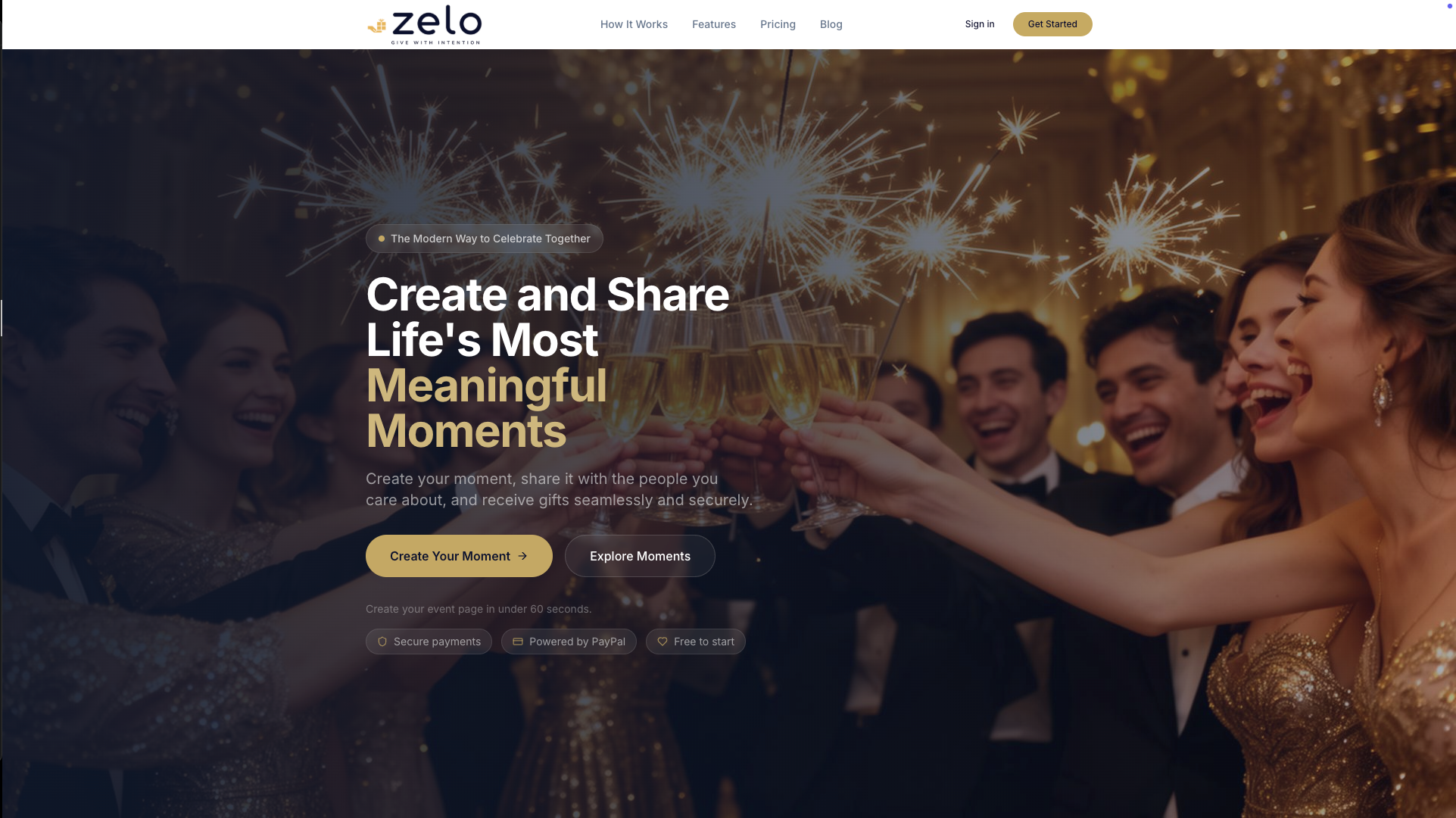
Getzelo is built for exactly this purpose. Hosts create personalized event pages for weddings, birthdays, baby showers, graduations, anniversaries, and housewarmings, then share specific experience goals with guests. Contributors go through a simple, secure checkout. No physical products, no shipping logistics, no clutter. Getzelo handles the coordination so hosts can focus on the celebration itself. For anyone ready to move beyond traditional registries, create your event page on Getzelo and give guests a genuinely meaningful way to celebrate with you.
FAQ
Why do physical gifts make people less happy over time?
Physical gifts trigger hedonic adaptation, a process where people quickly adjust to new possessions and stop deriving pleasure from them. Experiences avoid this pattern by generating joy across anticipation, participation, and recollection.
What makes an experience gift feel as satisfying as a physical one?
Tangible presentation elements such as printed itineraries, handwritten notes, or themed props give recipients something to open and hold, preserving the satisfying reveal moment while delivering a more meaningful gift.
Are experience gifts better for the environment?
Experience gifts bypass the full lifecycle impact of physical products, including manufacturing, packaging, shipping, and landfill disposal. The fashion and electronics industries, which dominate traditional gifting, are among the largest contributors to global carbon emissions.
How do named experience funds compare to generic cash gifts?
Named experience goals, such as “honeymoon dinner” or “cooking class for two,” generate stronger guest participation than open-ended cash requests because contributors can connect emotionally to a specific, meaningful outcome.
What is a soft registry and how does it work?
A soft registry focuses on funding experiences rather than listing physical products. Guests contribute toward specific experience goals, and the host receives funds to spend on activities, trips, or celebrations rather than objects.
Recommended
Enjoyed the article? Share it!